The Expanding Horizon and the Anxiety of Exchange
As we trace the megalithic phenomenon south into Extremadura and Andalucia, the foundational driver of the "Architecture of Anxiety", the need to define and hold territory, remains constant. The arid climax of the Holocene Optimum affected the entire southwestern peninsula, and indigenous communities continued to use the bones of their ancestors to lay claim to vital resources. In the fertile valleys of the south, this climatic anxiety began to intertwine with the way in which communities conducted exchange.
The Neolithic spread into southern Iberia took barely 500 years. It was not an overland slog, but a maritime phenomenon [Zilhão, 2001]. Early farming communities expanded from northeastern Spain down the Mediterranean coast, rounding the peninsula into Cadiz and Huelva provinces and thence up the Portuguese coast to Galicia. This was achieved through "coastal hopping", short voyages defined by how far a crew could paddle in a day before pulling their vessels onto a sheltered beach.
Because of this, the coastal populations of the south were intimately familiar with the sea and the maritime routes adjacent to their home territories. Once established, these pioneers populated major river valleys, such as the Ebro, Segura, Guadalquivir, Guadiana, and the Tagus, from the sea, moving upriver. Lacking advanced ploughs, they initially claimed the lighter, easily worked soils of the higher river terraces and tributaries. Only later, as populations expanded and this prime real estate ran out, were subsequent generations forced down into the heavier, waterlogged clays of the lower river sections and valley floors.
In the river valleys the Neolithic newcomers encountered a thinly spread indigenous Mesolithic population. Rather than being violently displaced, evidence suggests these hunter-gatherers were gradually assimilated into the new agricultural way of life. After this rapid initial spread, there is little evidence of continuous waves of seafaring reinforcements. The communities that emerged were a relatively static, fused population that expanded organically within their chosen territories.
As communities transitioned from a semi-nomadic lifestyle to permanent, open-air agricultural villages in the Middle to Late Neolithic, they shifted their preference toward elevated fluvial terraces right above the active floodplains (Carmona 2011). As mentioned, early Neolithic pioneers often avoided the wide, swampy, and unpredictable main channels of the largest rivers (like the lower Ebro). Instead, they preferred narrower tributary valleys and secondary river corridors. The secondary streams were much easier to manage, safer to cross, and served as navigable "highways" leading from the Mediterranean coast straight into the mountainous interior.
Inland, the landscape was already crisscrossed by terrestrial paths used by the indigenous hunter-gatherers. However, their traditional meeting places, often situated at prominent river bends or sheltered coastal inlets, were driven by biological necessity rather than economics. Small, highly mobile bands gathered at these nodes seasonally to exchange mates, a vital practice to prevent inbreeding [Cabello-Ligero et al., 2025].
As the agro-pastoral lifestyle took hold, the function of these ancient gathering spots fundamentally changed. Footpaths were widened by the hooves of newly introduced herds of sheep, goats, and cattle, becoming established drovers' routes. The seasonal biological gatherings evolved into recognised trading places. These were not markets or ports in any modern sense, but traditional meeting places where now-settled farming clans swapped surplus livestock, flint, and pottery.
The anxiety that manifests in the megaliths of the southwestern part of the Iberian Peninsula is intrinsically linked to these places of exchange. Through this slow, coastal-hopping network and the developing drovers' routes, rare and exotic items, amber, ivory, and eventually early metals, began to trickle into the local communities. The arrival of these high-status goods disrupted the egalitarian balance of the farming clans. It created a new kind of social pressure: the anxiety of prestige and unequal wealth.
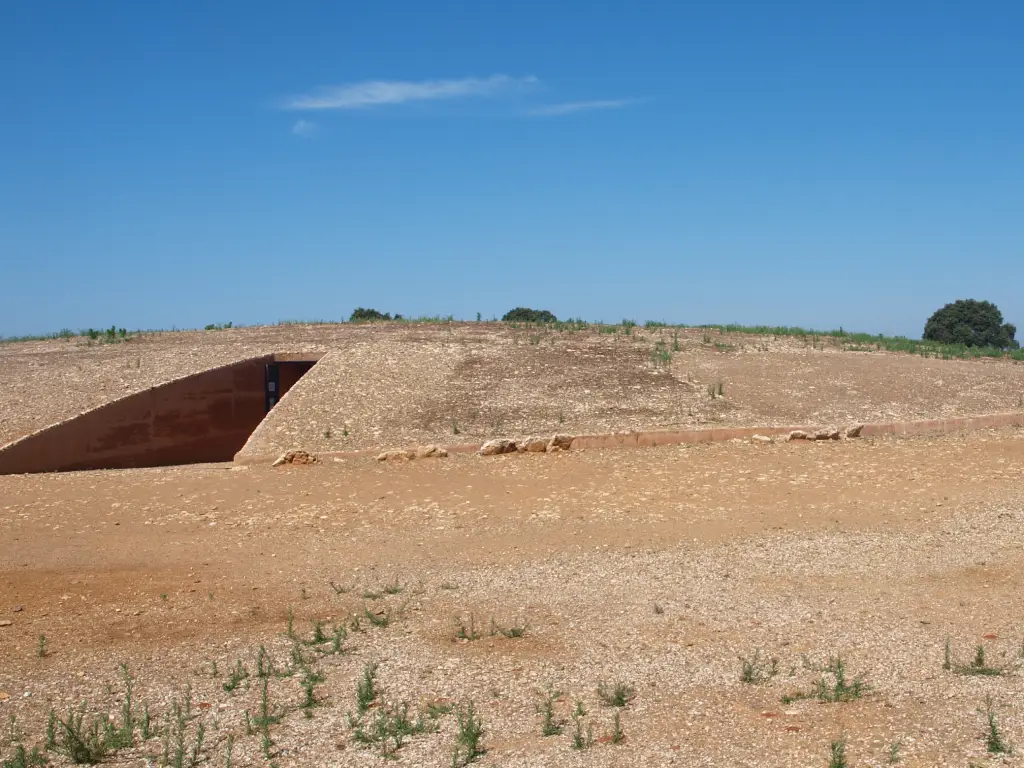
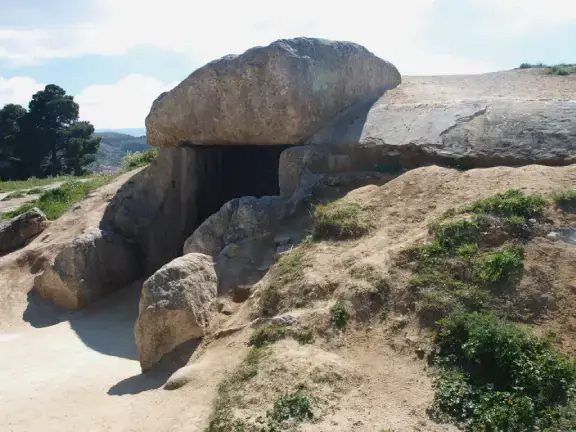
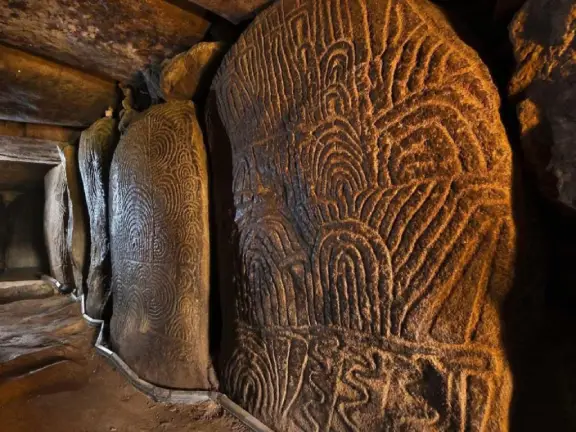
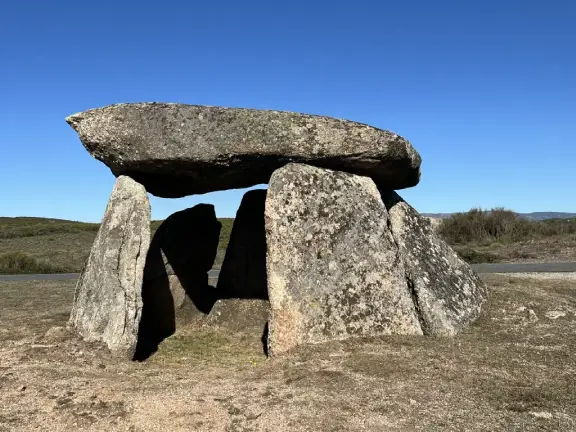
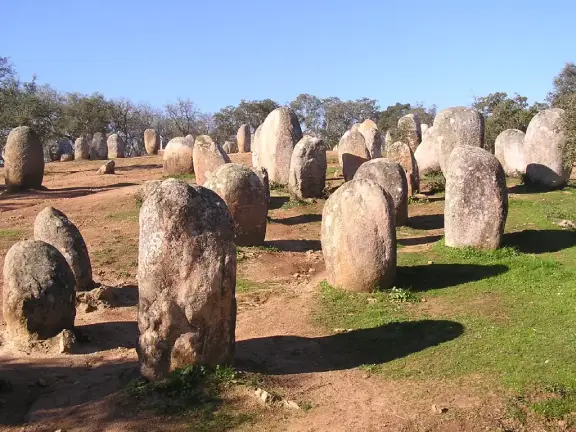
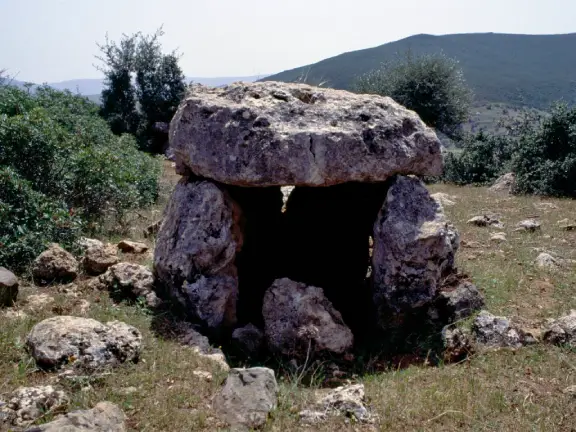
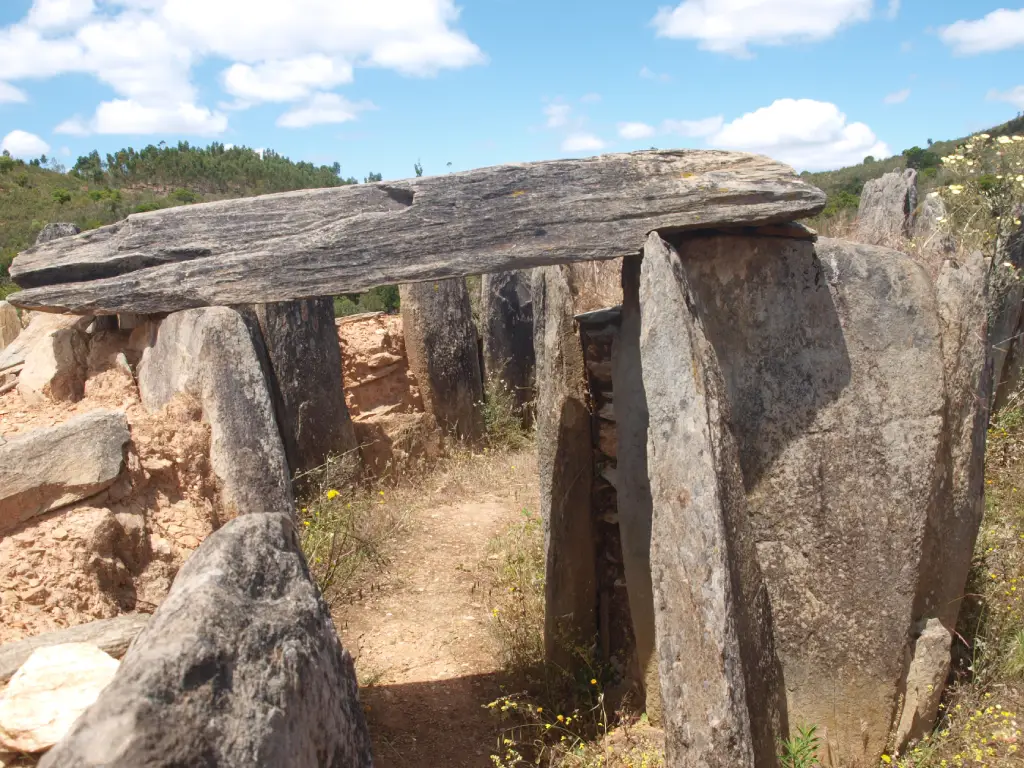
Megalithic dolmens were not built to guard physical borders; the fortified walls of settlements like Los Millares would come much later. Instead, the early dolmens were psychological anchors. As the landscape became busier and the informal trade networks became lucrative, local lineages needed an undeniable way to assert their identity. By building increasingly massive ancestral tombs near sheltered beaches, river bends, and drovers' paths, communities embedded their lineage into the landscape, claiming their traditional right to participate in the exchange.
Yet, this psychological attempt to maintain the status quo ultimately failed. The trickle of exotic wealth forged a society of extreme inequality, giving rise to ritual elites and sparking architectural achievements that force a re-evaluation of these early farming communities.